
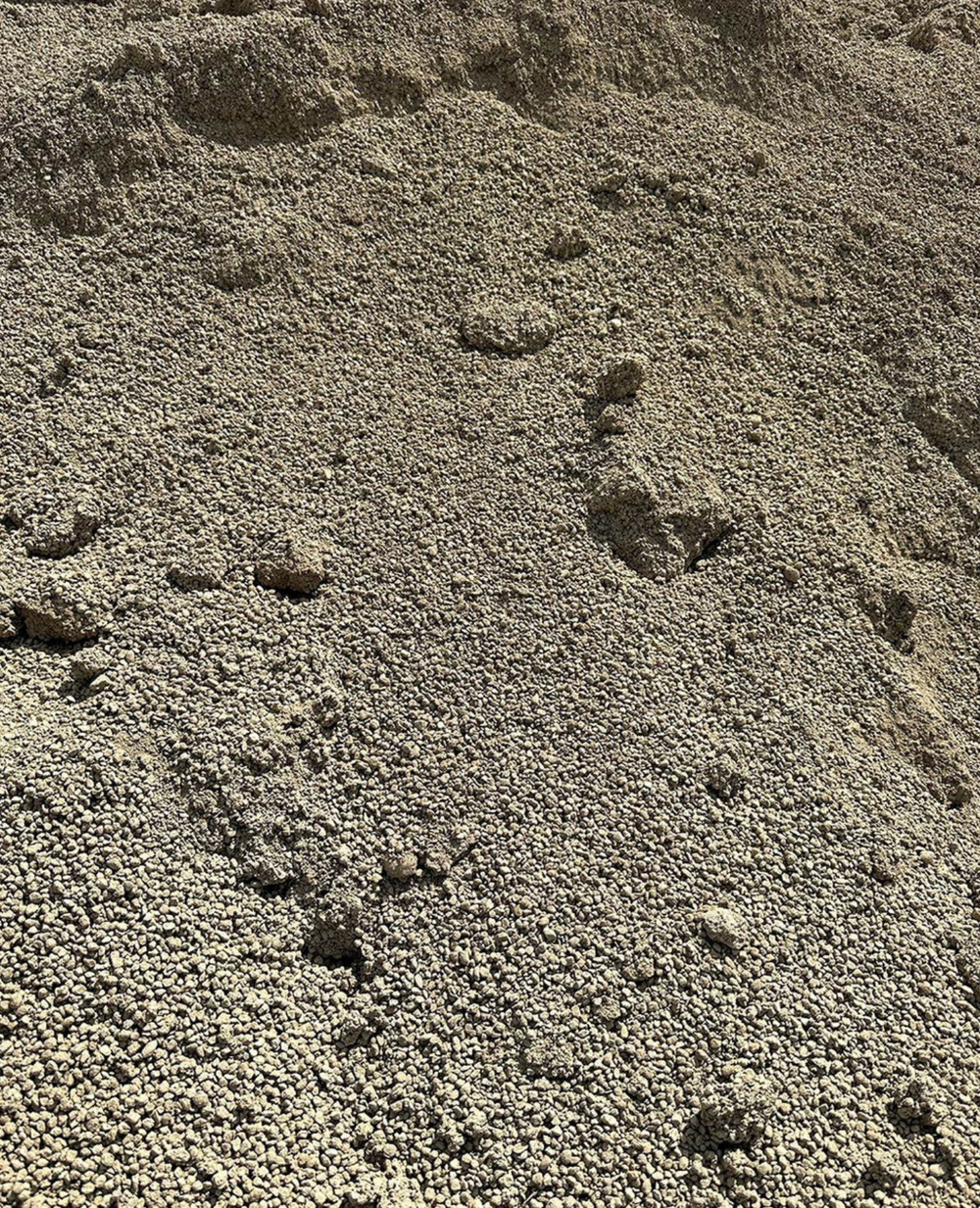
Most gravel questions at our yard are about driveways, and the answer is usually 5/8 minus. But there is a finer product that deserves more attention than it gets: 1/4 minus, also called quarter minus. It is the material behind those firm, smooth, almost-paved gravel paths you walk on at parks and botanical gardens, and it is the easiest way to make a flagstone patio sit flat. Here is what it is, what it is for, and when a different rock is the better call.
What is 1/4 minus (quarter minus) gravel?
1/4 minus is crushed rock screened to a maximum size of 1/4 inch with the fines left in, so it compacts into a firm, smooth, almost-paved surface.
Use it for: the top layer of pathways and walkways, leveling flagstone and pavers, and binding over larger base rock. Not for: drainage or as a stand-alone driveway material.
At Harbor Soils, 1/4" Minus Aggregate is $44.99/yd. Pickup in Gig Harbor or delivery across Kitsap County.
What is 1/4 minus gravel?
"Minus" means everything from the named size on down stays in the mix. 1/4 minus is rock crushed and screened so nothing is larger than 1/4 inch, and all the smaller particles, right down to rock dust, are left in. Those fines are the whole point. When you wet and compact quarter minus, the fines lock the small stones together into a dense, firm mass that behaves more like a soft pavement than like loose gravel.
You will hear the same material called quarter minus, quarter down, 1/4 inch minus, or crusher fines depending on who you ask. It is the finest crushed aggregate we sell, one step below 5/8 minus in the size ladder.
That compaction behavior is also the key to using it correctly. The same fines that make it firm underfoot make it nearly waterproof when compacted, which is why it shows up in the "do not use" section of our drain rock guide. Minus products build surfaces; clean products move water. Quarter minus is the most surface-like of them all.
1/4 vs 5/8 vs 3/4 vs 1-1/4 minus: which size do you want?
All four minus products compact hard. The top size decides what each is for: the bigger the rock, the more structural load it carries; the smaller the rock, the smoother the finished surface.
| Product | Price/yd | Role | Typical jobs |
|---|---|---|---|
| 1/4" Minus | $44.99 | Finish layer | Path and walkway topping, flagstone leveling, joint filler |
| 5/8" Minus | $34.99 | All-around workhorse | Driveways, parking pads, walkway bases |
| 3/4" Minus | $34.99 | Heavier base | Driveway bases, paver bases, road repair |
| 1 1/4" Minus | $35.99 | Structural sub-base | Heavy-traffic driveways, structural fill, sub-base under everything else |
Notice the price: quarter minus costs more per yard than the bigger sizes because of the extra crushing and screening it takes to make. That is another reason it is a finish material, not a fill material. Put the cheap structure underneath and save the quarter minus for the top inch where you can see and feel it. The full break-downs live in our 5/8 minus guide and 3/4 gravel guide.
What people use 1/4 minus for
Pathway and walkway top layers
This is the signature use. A compacted quarter minus surface is smooth enough for bare feet, wheelbarrows, strollers, and wheeled garden carts, and firm enough that heels do not sink in. It is the standard finish for garden paths, park-style walking trails, and the routes you push a mower or barrow along every week. If you have admired a tidy crushed-gravel path at a public garden, you were probably walking on a quarter-minus-class material. For layout and design ideas, see our garden path guide.
Leveling and setting flagstone or pavers
Quarter minus screeds flat and compacts firm, which makes it an excellent leveling bed for flagstone and pavers over a compacted base of larger minus rock. Set the stones, tap them level, and the fines hold everything in place. It also works swept into the joints between flagstones as a finished joint filler. The structural layers underneath are covered in our paver base guide.
Binding layer over coarser rock
A thin lift of quarter minus over a coarser compacted surface fills the voids, locks the top, and smooths the ride. It is a common upgrade over an existing 5/8 or 3/4 minus surface that is functionally fine but rough looking, and it is useful for filling small voids and low spots before a final compaction pass.
Quarter minus vs decomposed granite
Functionally, these are cousins. Both are fine, compactable materials that firm up into a natural-looking path or patio surface. Decomposed granite is a specific product, weathered granite with a signature golden-tan color, and it carries a premium look and often a premium logistics cost in our area. Quarter minus is locally crushed rock, typically gray, available by the yard at local prices. If the design calls for the DG color, our decomposed granite guide covers working with it. If the goal is simply a firm, clean, natural path surface, quarter minus does the same job for less.
When 1/4 minus is the wrong rock
- Drainage, French drains, dry wells. Never. The fines clog and seal. Use clean, washed rock like 3/4" Clean; the full decision tree is in the drain rock guide.
- As the main driveway material. Too fine to carry vehicle loads on its own. Build the driveway from 1 1/4 and 5/8 minus per our gravel driveway guide, and use quarter minus only as an optional cosmetic top lift.
- Muddy areas without a base. Spread over soft, wet ground, a thin fine layer disappears into the mud by spring. Fix the base first with larger rock, then finish with quarter minus.
- Anywhere you want loose, decorative texture. Quarter minus packs into a solid surface. If you want the loose, rounded look and feel, that is pea gravel territory.
How to build a quarter minus path that lasts
- Excavate 4 to 5 inches below finished grade and compact the native soil. On soft or mucky ground, add non-woven landscape fabric to keep the rock from migrating into the soil.
- Base layer: 3 to 4 inches of 5/8 minus (or 1 1/4 minus for cart-and-tractor duty), compacted in lifts. This is the structure.
- Finish layer: roughly an inch of 1/4 minus, raked smooth, lightly wetted, and compacted with a plate compactor or hand tamper.
- Crown or cross-slope it slightly so rain sheds off the surface. Remember, a compacted minus path sheds water like a roof; give that water somewhere to go.
- Edge it if you want crisp lines. Steel, timber, or stone edging keeps the shoulders from feathering out over the years.
Skipping the base is the mistake we see most. Quarter minus alone over firm ground can survive as a light-duty garden path, but a Pacific Northwest winter finds every shortcut. The base-plus-topping build is the one that still looks sharp in five years.
How much do you need, and what does it cost?
The formula: length (ft) x width (ft) x depth (inches) / 324 = cubic yards. Because the topping layer is thin, a yard of quarter minus goes a long way: about 324 square feet at 1 inch deep, or roughly 300 linear feet of 3-foot-wide path topping.
| Project | Quarter minus needed | Material cost |
|---|---|---|
| 50 ft x 3 ft path, 1" topping | ~0.5 yd | ~$22 |
| 100 ft x 4 ft path, 1" topping | ~1.25 yd | ~$56 |
| 10 ft x 12 ft flagstone patio, 1" setting bed | ~0.4 yd | ~$17 |
Add the base rock (at $34.99 to $35.99 per yard) for the full project cost, and run any shape through our cubic yard calculator. Like our other minus products, a yard weighs roughly 2,700 to 2,800 pounds, which is more than a half-ton pickup should carry, so plan on delivery or multiple small loads.
Questions we get a lot
What is quarter minus?
Quarter minus is another name for 1/4 minus gravel: crushed rock with a 1/4 inch top size and the fines left in, so it compacts into a firm, smooth surface. Same material, different name; you will also hear quarter down and crusher fines.
What is the difference between 1/4 minus and 5/8 minus?
Top size and role. 5/8 minus is the all-around driveway and parking material; 1/4 minus is the finer finish layer for paths and stone setting. Both compact hard; the 5/8 carries loads, the 1/4 feels smoother underfoot.
Is 1/4 minus good for a driveway?
Not as the main material. Build the driveway from larger minus rock and, if you want a smoother look, add a thin quarter minus finishing lift over the top of a properly built surface.
Can I set flagstone or pavers on it?
Yes, that is one of its best uses. Screed it flat over a compacted base, set and tap the stones level, and sweep it into the joints when you are done.
Does 1/4 minus drain?
No. Compacted quarter minus sheds water off its surface instead of letting it through. Keep it out of French drains and dry wells; use clean washed drain rock there instead.
Quarter minus or decomposed granite for a path?
They perform the same job. Choose DG for its golden color if the design demands it; choose quarter minus for a local, economical, gray path surface that compacts just as firm.
How deep should a quarter minus path be?
About an inch of quarter minus over 3 to 4 inches of compacted larger minus base. Light-duty garden paths sometimes run 2 inches of quarter minus alone over firm ground, but the based build lasts much longer here.
How much does a yard weigh?
Roughly 2,700 to 2,800 pounds, like our other minus gravels. One yard covers about 324 square feet at 1 inch deep.
Do you deliver in Kitsap County?
Yes, from our Gig Harbor yard to Gig Harbor, Port Orchard, Bremerton, Silverdale, Poulsbo, Bainbridge Island, and the rest of Kitsap County. Pickup by the yard is available at 11612 WA-302.
Get 1/4 minus delivered
Order 1/4" Minus Aggregate for $44.99 per yard, browse the full crushed rock collection, or call 253-857-5125 and tell us about the path you are building. We deliver across Kitsap County, usually within a day or two.