
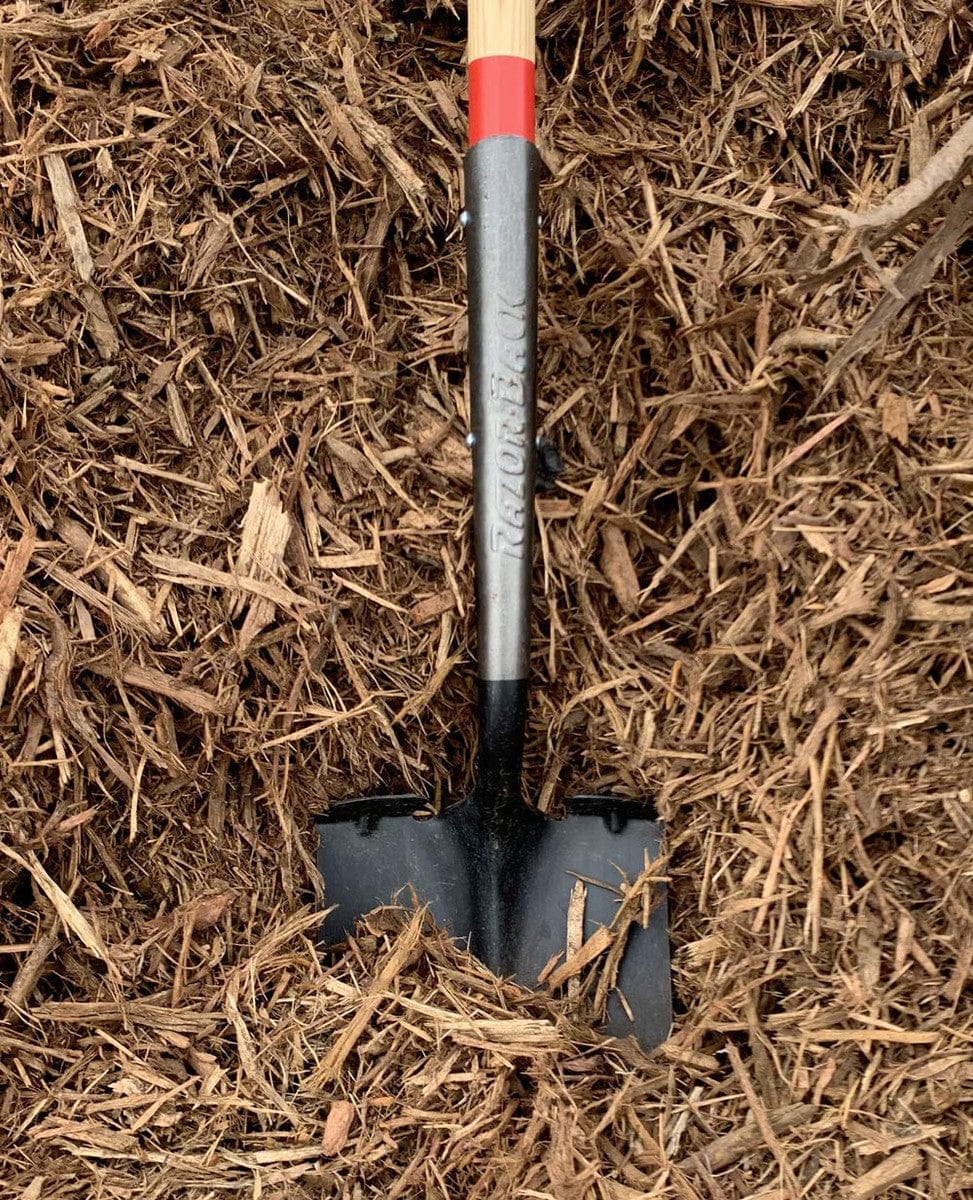
People come to our yard asking for "cedar chips" or "wood chips," and half the time we end up sending them home with bark or hog fuel instead, because that is what actually does the job they have in mind. Wood mulch is a whole family of products, and the names get used loosely. Here is a plain guide to cedar chips, arborist chips, fir bark, hog fuel, and bark dust: what each one really is, what Pacific Northwest landscape yards actually stock, and which to use where.
Cedar chips vs wood chips vs bark: the quick answer
Cedar chips are clean, uniform cedar wood pieces for paths and play areas. Arborist wood chips are the coarse, mixed chips a tree crew makes, great around trees and often free. Fir bark (beauty bark) is the decorative Douglas fir bark for ornamental beds. Hog fuel is a cheap, coarse bark and wood mix for paths, play areas and mud. Bark dust is the finest, smoothest bark topping.
Harbor Soils stocks bulk bark, mulch and hog fuel from $12.99/yd. Pickup in Gig Harbor or delivery across Kitsap County.
"Wood chips" means five different things
Part of the confusion is that "wood chips" and "bark" get used as catch-all terms for anything brown you spread on the ground. In practice, PNW landscapers separate these products by what they are made of and how coarse they are. Here is the whole family at a glance, with the Harbor Soils product that fits each one.
| Product | Made of | Texture | Best for | At Harbor Soils |
|---|---|---|---|---|
| Arborist wood chips | Mixed chipped branches, wood and bark from tree work | Coarse, uneven | Around trees and shrubs, soil building, rough paths | Nearest stocked match: Hog Fuel $12.99 |
| Cedar chips | Cedar wood | Uniform, clean | Play areas, dog runs, decorative paths | Alternatives: Small Nugget Bark $54.99, hog fuel |
| Fir bark (beauty bark) | Douglas fir bark | Fine to medium | Ornamental beds, curb appeal | Fine Bark $35.99, Dark Medium Bark $36.99, Dark Fine Bark $38.99 |
| Hog fuel | Coarse ground bark and wood | Very coarse, stringy | Playgrounds, arenas, mud, erosion, budget coverage | Hog Fuel $12.99 |
| Bark dust / mulch | Finely ground bark or wood | Fine, smooth | Smooth decorative finish, weed suppression | Double Grind Mulch $20.99, Harbor Mulch $24.99 |
If you only remember one thing: bark and wood chips are not the same material. Bark is the outer skin of the tree, wood chips are the inside. That difference is covered in depth in our bark vs mulch guide. The rest of this article walks through each product and where it shines.
Arborist wood chips: the free option with a catch
Arborist wood chips are exactly what they sound like: the chips a tree service produces when it prunes or takes down trees. They are a mix of wood, bark, leaves and small branches, often from several species, in a range of sizes. Because tree crews otherwise pay to dispose of them, they will frequently drop a full load in your driveway for free.
They are also, according to Washington State University Extension research, one of the best mulches you can put around trees and shrubs. They hold moisture, moderate soil temperature, suppress weeds, and slowly build soil as they break down. If you have a big bed or an orchard and you are patient, free arborist chips are hard to beat.
The catch is control. You get whatever the crew was cutting that day, in a large uneven pile, whenever they happen to have a load near you. For a front yard where appearance matters, or a project you need finished this weekend, that unpredictability is a problem. That is where a screened, delivered bulk product wins: our hog fuel is the closest stocked equivalent in character, and our guide to mulching around trees covers doing it right either way.
Cedar chips: clean and slow, but not magic
Cedar chips are prized for two things: they are clean and uniform, which looks tidy in a play area or along a path, and they break down slowly because cedar's natural oils resist decomposition. A cedar path or dog run stays looking good longer than one topped with fine bark.
Two honest caveats. First, the famous bug repelling reputation is real but modest. Cedar oils can deter some insects, but as an outdoor mulch spread over a bed, that effect is limited and fades. Treat cedar as a good looking, long lasting mulch, not as pest control. Second, in the Pacific Northwest, bulk cedar chips are not a standard landscape yard product the way fir bark is, because our bark supply is overwhelmingly Douglas fir and hemlock. If you want the clean, chunky, slow breaking look for a play area or path without special ordering cedar, our small nugget bark gives a similar chunky texture, and hog fuel gives the coarse, long lasting play surface for far less money.
Fir bark and beauty bark: the PNW standard
When someone in western Washington says "bark," they almost always mean Douglas fir bark. It is the default landscape bark here, and the fine, uniform grades sold for ornamental beds are what most people call beauty bark. It gives that clean, dark, finished look that makes a planting bed look freshly maintained.
Fir bark comes in grades. Fine bark ($35.99) is the smooth classic for front beds. Dark medium bark ($36.99) and dark fine bark ($38.99) add richer color. Small nugget bark ($54.99) is chunkier and lasts longer with a more casual look. For the very finest smooth topping, our bark dust guide covers the fines end of the range. Browse them all in the barks collection.
Hog fuel: the budget workhorse
Hog fuel is a coarse, rough ground mix of bark and wood, and at $12.99 a yard it is the most economical wood mulch we carry. It is not decorative, it is stringy and irregular, but that texture knits together and stays put, which makes it the go to for the jobs where you need to cover a lot of ground cheaply and take a beating:
- Playgrounds and play areas, where a thick cushioning layer matters more than looks.
- Horse arenas, paddocks and dog runs, where it controls mud and takes traffic.
- Walking paths and trails through wooded or natural areas.
- Muddy spots and erosion control, where it holds soil and gives footing.
Right behind it, double grind mulch ($20.99) and Harbor mulch ($24.99) offer a tidier, more uniform look at still budget friendly prices, bridging the gap between rough hog fuel and decorative bark.
Do wood chips rob nitrogen from your soil?
This is the single most common worry we hear, and the short answer is: not when used correctly. Washington State University Extension has addressed this directly. When wood chips or bark sit on top of the soil as mulch, the microbes that break them down only pull nitrogen from a thin layer right at the surface where mulch meets soil. The roots of your established plants, down below that interface, are not affected.
The nitrogen problem is real only when you till or dig fresh wood into the soil. Then soil microbes need a lot of nitrogen to process all that carbon, and they compete with plant roots for it. So the rule is simple: keep wood mulch on the surface, never mix it in. Applied as a topdressing, wood chips and bark improve your soil over the years rather than starving it. The one place to be cautious is around seedlings, new grass seed and shallow rooted annual beds, where you want a thinner layer and a little extra care.
Which wood mulch should you use? A quick decision guide
- Around trees and shrubs, building soil: arborist wood chips if you can get them, or a coarse product like hog fuel or nugget bark.
- Front ornamental beds, curb appeal: fine bark or dark fine bark for that clean, finished look.
- Playground or dog run: hog fuel for value and cushioning, or a chunky cedar or nugget product for a cleaner look.
- Muddy area or erosion control: hog fuel, hands down.
- Tightest budget, big area: hog fuel at $12.99, then double grind mulch at $20.99.
- Weed suppression under a smooth finish: a fine bark dust or mulch, and see our fabric vs mulch guide before you lay plastic.
Trying to decide between wood mulch and rock instead? Our rock mulch vs wood mulch guide weighs the trade offs, and the fall mulching guide covers the best time of year to lay it down here.
How much wood mulch do you need?
Spread wood mulch two to four inches deep. Two inches suppresses weeds and holds moisture on an established bed; three to four inches gives longer lasting coverage on paths, around trees, and over bare ground. The formula is length (ft) x width (ft) x depth (inches) / 324 = cubic yards.
| Coverage per yard | Area covered |
|---|---|
| At 2 inches deep | ~160 sq ft |
| At 3 inches deep | ~110 sq ft |
| At 4 inches deep | ~80 sq ft |
Run your beds through our mulch calculator or the all material cubic yard calculator to get an exact order. Once you are covering more than a few square yards, bulk delivery beats bagged mulch on both price and effort by a wide margin.
One rule: keep wood mulch off your siding
Wherever you use wood mulch, keep it away from the house. Mulch piled tight against siding and foundations stays damp, and in our wet climate that invites carpenter ants and other wood destroying insects, while hiding moisture problems until they are serious. Leave a gap of at least six inches, and ideally a foot or more, of bare soil or gravel between any wood mulch and the wall of the house. The same goes for piling mulch against tree trunks: pull it back a few inches so the bark can breathe.
Wood mulch delivery in Gig Harbor and Kitsap County
Harbor Soils delivers bulk bark, mulch and hog fuel throughout Gig Harbor, Port Orchard, Bremerton, Silverdale, Poulsbo, Bainbridge Island and the rest of Kitsap County from our yard at 11612 WA-302 in Gig Harbor. Pickup by the yard is welcome too. Not sure which product fits your project? Call 253-857-5125 and describe what you are covering, and we will point you to the right one. Local delivery details are in our Gig Harbor bark delivery and Kitsap County bulk mulch delivery guides.
Questions we get a lot
Are cedar chips and bark dust the same thing?
No. Cedar chips are pieces of cedar wood, uniform and clean, used for paths and play areas. Bark dust is finely ground tree bark, here usually Douglas fir or hemlock, used as a smooth decorative topping. One is wood, the other is bark, and they look and behave differently.
Do cedar chips repel bugs?
Mildly, and the effect is often overstated. Cedar oils can deter some insects, but as an outdoor mulch the effect is limited and short lived. Choose cedar for its clean look and slow breakdown, not as pest control.
Are arborist wood chips free, and where do I get them?
Often yes. They are the mixed chips a tree crew makes, and crews frequently drop a load for free rather than pay to dump it. Ask a local tree company or use a chip matching service. The trade off is you get whatever they were cutting, in a big uneven pile, on their schedule. For a consistent, delivered product, bulk bark or hog fuel is the reliable alternative.
Do wood chips rob nitrogen from the soil?
Not as a surface mulch. WSU Extension is clear that wood chips on top of the soil only tie up nitrogen in a thin layer at the surface, which does not affect established plant roots below. The real drawdown happens only when you till fresh wood into the soil. Keep mulch on the surface.
What is hog fuel used for?
Hog fuel is a coarse, cheap bark and wood mix for large, rough coverage: playgrounds, arenas, paddocks, dog runs, paths, mud and erosion control. At $12.99 a yard it covers a lot of ground and takes a beating.
Is fir bark the same as beauty bark?
Essentially yes in the PNW. Retail landscape bark here is usually Douglas fir bark, and beauty bark is a common name for the fine, uniform grades used on ornamental beds. Our fine and medium bark are fir bark products.
How long do cedar chips and bark last?
Woody mulches all break down slowly, generally lasting a few years. Cedar tends to last longer because its oils resist microbes, and coarse products outlast fine ones. Decorative bark is usually refreshed each year for appearance; coarse hog fuel and nugget bark can go longer.
How deep should wood mulch be?
Two to four inches. Two inches for weed control on established beds, three to four for paths, tree rings and bare ground. Deeper does not help and can trap too much moisture. Keep it pulled back from trunks and stems.
Can I put wood chips right against my house?
Better not to. Mulch against siding stays damp and can invite carpenter ants and other wood destroying insects. Leave a gap of at least six inches, ideally a foot or more, between wood mulch and the house.
What is the cheapest wood mulch in Kitsap County?
Hog fuel at $12.99 per yard is the most economical bulk wood mulch we carry, with double grind mulch at $20.99 next. Both beat bagged mulch on price once you are covering real area, and we deliver across Kitsap County.
Get wood mulch delivered
Order hog fuel for $12.99 per yard, browse the full bark and mulch collection, or call 253-857-5125 and tell us what you are covering. We deliver across Kitsap County from Gig Harbor, usually within a day or two.