
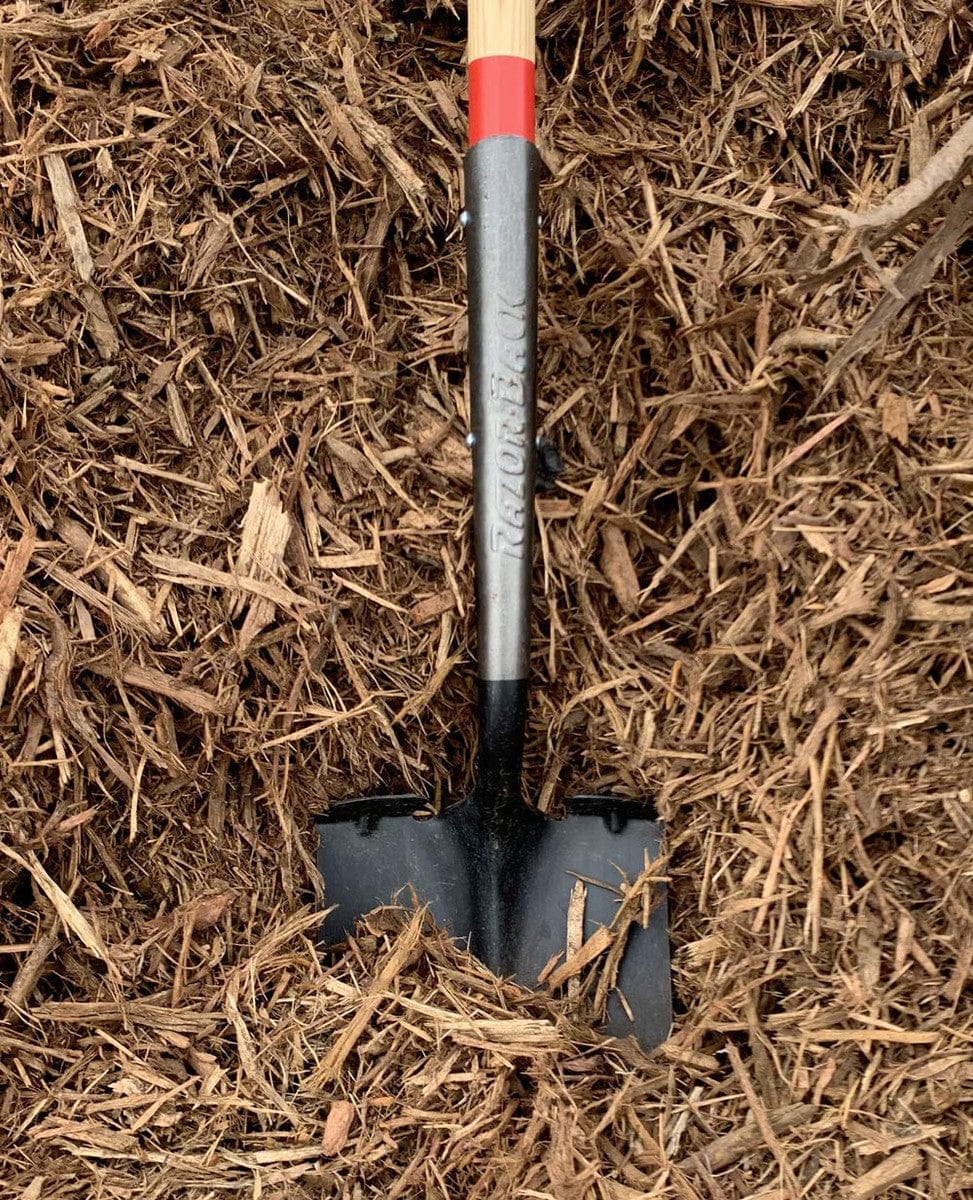
Hog fuel has the least glamorous name in the yard and does some of the most useful work. It is the coarse, cheap ground bark and wood that covers playgrounds, horse arenas, muddy paddocks, dog runs and rough paths for a fraction of what decorative bark costs. If you have a big area to cover and you care more about function than looks, this is often the right product, and the wrong one for a front flower bed. Here is what it is, where it shines, and what it costs.
What is hog fuel?
Hog fuel is a coarse, ground mix of bark and wood residue, used for rough coverage where looks do not matter: playgrounds, horse arenas, mud control, dog runs and paths.
Use it for: big utilitarian coverage on a budget. Not for: front ornamental beds, where you want finished decorative bark.
At Harbor Soils, Hog Fuel is $12.99/yd, our cheapest wood product. Pickup in Gig Harbor or delivery across Kitsap County.
What hog fuel actually is
The odd name comes from the machine, not the animal. A "wood hog," or hogger, is the industrial grinder that chews up mill and forestry leftovers, bark, wood, shavings and residue, into a coarse, fibrous material. That ground-up product is hog fuel. Originally it was burned as boiler fuel, which is where the "fuel" comes from, and the landscape version is the same rough material sold by the yard for ground cover.
In the Pacific Northwest, hog fuel is usually a Douglas fir and hemlock mix, though it can include other species. What matters for the yard is the texture: it is coarse, irregular and stringy, with a jumble of larger chunks, bark and wood fiber. That is very different from the two products people often confuse it with. Bark dust is fine, smooth ground bark for a tidy decorative finish. Bark nuggets are large, uniform, decorative chunks. Hog fuel sits in its own category: rough, mixed, and built for coverage rather than curb appeal. For the full family of bark and wood mulches, see our wood mulch guide.
What hog fuel is used for
That coarse texture is the whole point. The rough fibers knit together and stay in place, and the low price means you can cover a large area without much cost. That combination makes hog fuel the default for a handful of jobs:
- Playgrounds and play areas. A thick, cushioning layer where a soft landing matters more than looks.
- Horse arenas, paddocks and confinement areas. A common footing and mud-control material in our wet climate. More on this below.
- Dog runs and animal pens. Cheap, drains reasonably, and easy to refresh.
- Walking paths and trails. Through wooded or natural areas where a rustic surface fits.
- Mud control. Over soft, wet ground at gateways, around outbuildings, and in high-traffic spots that turn to soup in winter. Pair it with the fixes in our yard drainage guide.
- Erosion control and rough bulk coverage. On slopes and bare ground where you need cheap cover fast. For steeper slopes, combine it with the rock in our hillside erosion guide.
Hog fuel for horse arenas and paddocks
Around Gig Harbor and the Key Peninsula, one of the most common reasons people order hog fuel is horse footing. It drains well, cuts down mud and odor, and cushions high-traffic areas through a wet Pacific Northwest winter, which is why it is a go-to for arenas, paddocks and confinement areas.
A few honest notes so it works well for you:
- Depth. A riding arena or heavy-use paddock usually wants a deep footing, on the order of 6 to 8 inches, built up and topped as it compacts. For simple mud control at a gate or run-in, 3 to 4 inches over firmer ground does the job.
- It breaks down. Hog fuel is organic, so it decomposes and packs down over time and needs replenishing, often every year or two in a busy horse area. Budget for topping it up rather than expecting a one-time fix.
- Source matters for livestock. For horse areas specifically, you want screened material from a known source, not random tree trimmings, because a few tree species can be harmful to horses. When you order for an arena or paddock, tell us that is the use so we can point you to the right material.
- Very wet, low spots. In a chronically soggy area, organic footing breaks down fast. Sometimes a gravel base under the hog fuel, or a crushed rock solution, holds up better. We can talk through the base.
Hog fuel vs bark vs the other wood mulches
Hog fuel is the budget, utilitarian end of the wood mulch range. Here is where it sits against the tidier products at Harbor Soils.
| Product | Price/yd | Look | Best for |
|---|---|---|---|
| Hog Fuel | $12.99 | Rough, coarse | Playgrounds, arenas, mud, paths, bulk coverage |
| Double Grind Mulch | $20.99 | Coarse, tidier | Budget beds and coverage with a cleaner look |
| Harbor Mulch | $24.99 | Uniform | General-purpose mulch, mid-range look and price |
| Fine Bark | $35.99 | Fine, finished | Front ornamental beds, curb appeal |
| Dark Medium Bark | $36.99 | Rich, decorative | High-visibility beds that hold color |
The pattern is simple: as you move up in price you move up in appearance. Hog fuel is the value pick when the area is large or out of sight; decorative bark is worth it where people actually look. Our bark vs mulch guide covers the difference between bark and wood products in more depth, and the rock vs wood mulch guide helps if you are weighing gravel instead.
Why hog fuel is the cheapest mulch we sell
At $12.99 per cubic yard, hog fuel is roughly a third of the price of our decorative fir bark, and a small fraction of bagged mulch once you are covering any real area. It is a byproduct, ground from residue rather than screened and refined into a uniform decorative grade, and that is exactly why it is cheap. You are paying for coverage and function, not looks.
The savings are biggest at scale. Bagged mulch from a big-box store runs a few dollars per bag, and it takes 27 bags to equal a single cubic yard. Covering a paddock or play area in bags means dozens of trips and a much higher total than a few yards of bulk hog fuel delivered in one drop. For any project past a yard or so, bulk wins on both price and effort.
How much hog fuel do you need?
Use the standard formula: length (ft) x width (ft) x depth (inches) / 324 = cubic yards. Because hog fuel often goes down deep, the yardage adds up faster than for a thin decorative topping.
| Coverage per yard | Area covered |
|---|---|
| At 3 inches deep | ~110 sq ft |
| At 4 inches deep | ~80 sq ft |
| At 6 inches deep (arena footing) | ~54 sq ft |
Run your exact area through our mulch calculator or the all-material cubic yard calculator. For a big arena or paddock, add a bit extra for compaction, and remember you will be topping it up over time as it breaks down.
Where not to use hog fuel
- Front ornamental beds. Too coarse and rough for a finished look. Use fine bark or a decorative dark bark there.
- Against siding and foundations. Like any wood mulch, it stays damp against the house and can invite carpenter ants and other wood-destroying insects. Leave a gap of at least six inches, ideally a foot or more, of bare ground or gravel.
- Around trees, tight to the trunk. Hog fuel is fine as a tree-ring mulch, but keep it pulled back from the trunk. See our mulching around trees guide.
Hog fuel delivery in Gig Harbor and Kitsap County
Harbor Soils delivers bulk hog fuel throughout Gig Harbor, Port Orchard, Bremerton, Silverdale, Poulsbo, Bainbridge Island and the rest of Kitsap County from our yard at 11612 WA-302 in Gig Harbor. Pickup by the yard is welcome too, though a full yard of hog fuel is heavy and bulky, so most orders of any size go out by delivery. Ordering for an arena, paddock, playground or drainage project? Call 253-857-5125 and tell us the use and the area, and we will help you get the depth and quantity right. Local delivery details are in our Gig Harbor bark delivery and Kitsap County bulk mulch delivery guides.
Questions we get a lot
What is hog fuel?
A coarse, ground mix of bark and wood residue, named for the wood hog machine that grinds it. In the PNW it is usually a fir and hemlock mix. It is rougher than bark dust and less uniform than bark nuggets, and at $12.99 a yard it is our cheapest wood product.
What is hog fuel used for?
Rough, large-area coverage where looks do not matter: playgrounds, horse arenas and paddocks, dog runs, paths, mud control and erosion control. Not for front ornamental beds.
Is hog fuel good for horse arenas?
Yes, it is a common arena and paddock footing here. It drains well and cuts mud, but it breaks down and needs topping up every year or two, and you want screened material from a known source for livestock areas.
How deep should hog fuel be?
About 6 to 8 inches for a horse arena or heavy paddock, 3 to 4 inches for mud control or general ground cover.
Is hog fuel the same as gorilla hair?
Not exactly. Gorilla hair is specifically shredded redwood or cedar bark, a stringy fiber. Hog fuel is a coarser mixed bark and wood product. Some yards use the names loosely, but they are not identical.
How long does hog fuel last?
About 3 to 5 years as ground cover, longer than fine bark, before it breaks down into finer material. In busy arenas and paddocks it compacts faster and gets topped up more often.
Is hog fuel cheaper than bark?
Yes, much. It is $12.99 a yard versus $35.99 and up for decorative fir bark. The trade off is that it is rough and utilitarian, not a finished decorative look.
Can I use it in flower beds or against the house?
Skip both. It is too coarse for ornamental beds, and no wood mulch should sit tight against siding. Keep a gap of six inches or more from the house.
Does the tree species matter?
For landscape and path use, not really. It matters most for horse areas, where screened, known-source material avoids any species that could harm livestock.
Do you deliver in Kitsap County?
Yes, from our Gig Harbor yard to Gig Harbor, Port Orchard, Bremerton, Silverdale, Poulsbo, Bainbridge Island and the rest of Kitsap County. Pickup by the yard is available at 11612 WA-302.
Get hog fuel delivered
Order Hog Fuel for $12.99 per yard, browse the full bark and mulch collection, or call 253-857-5125 and tell us what you are covering. We deliver across Kitsap County from Gig Harbor, usually within a day or two.